
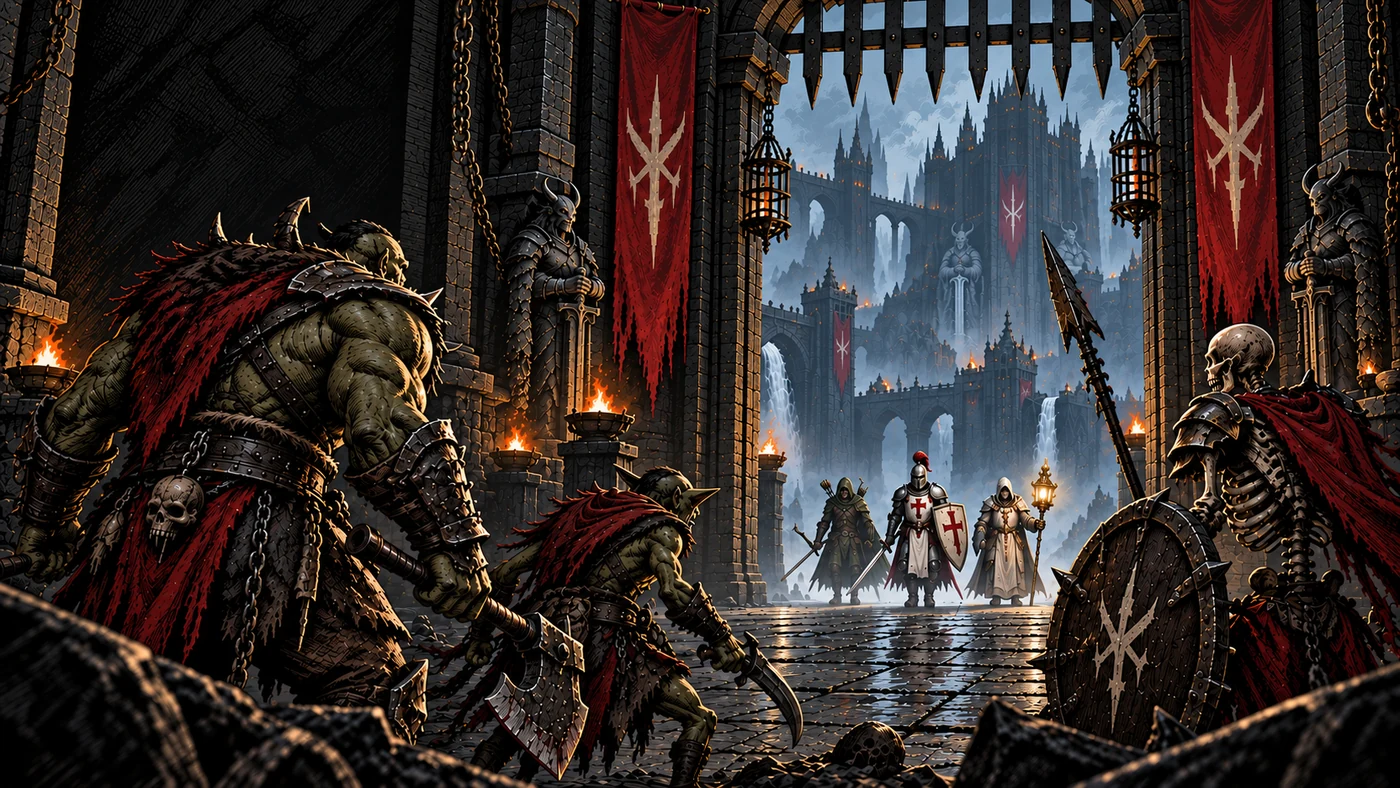
A knight, a ranger and a cleric arrive at your gate. In many games, that would be your party. In REIGN OF THE NAMELESS, it is the problem you need to solve.
We are Double X Games, a small independent Australian studio, and REIGN is our first game. It is a singleplayer tactical roguelite about building a monster defence against invading heroes. You rule the dungeon. You choose the creatures who will hold it. The crusade on the other side has its own weapons, healers and plans for getting through.
This journal opens with six articles looking back at the foundations we have been building and explaining the work now underway. They are published together today, rather than presented as announcements from earlier milestones.
On the other side of the gate
The change in perspective is what interests us. A familiar fantasy party becomes a set of tactical problems: armour that keeps a front line alive, ranged pressure behind it, and support that can undo part of your hard work. A goblin is suddenly one of your resources. A skeleton is someone you need to place carefully.
That premise becomes more useful when the invasion has a memory. REIGN's current run is one crusade fighting through a four-room defence. The invaders who survive continue deeper into the dungeon. Their injuries and casualties matter across rooms. The first gate can shape the final fight even when it fails to stop them.
Your role is to prepare each garrison and its formation, then watch the battle resolve. You are not giving every creature an order for every swing. Choosing what to field, where it begins and how it fits the rest of the defence carries much of the decision making. Gambits add another way to influence a fight with limited resources.
A roster worth returning to
A dungeon army needs more than a ladder of increasingly expensive replacements. Cheap packs, a stubborn front line, ranged attackers and support creatures should give you different reasons to spend your budget.
That is why we are paying attention to the relationship between progression and choice. Unlocking an Orc Marauder should create a new option beside the Goblin Cutter, not make the goblin an obsolete purchase. Choosing a harder crusade should be deliberate. Returning to an easier unlocked tier should remain possible.
Those are design aims we can test. Whether they produce interesting decisions over many runs still needs player feedback. We will use this journal to explain both what a system is meant to do and what we learn when people actually use it.
The world and the battlefield
REIGN's marketing art frames the dungeon as a place under siege: stone, darkness, monsters and a bright invading threat at the threshold. Our key illustration, The Gate, captures that confrontation. The game itself uses pixel-art combatants and battlefield presentation; the illustration is key art, rather than a gameplay screenshot.
The same concern runs through the interface. A dangerous-looking army is only useful if you can understand what it costs, what is approaching and why a fight turned against you. Presentation and tactical clarity need to develop together.
Following the reign
Our immediate focus is preparation for a controlled Steam Playtest. The game remains in development, and access details will be shared when they are configured and verified. We have not announced a release date.
The REIGN page introduces the game, the roadmap explains our broad direction, and this journal will hold the development notes behind it. Next, we will look more closely at the crusade that persists through your dungeon.